
 Saurabh Srivastava
Crown Perth punters and casual arvo players often reckon pai gow looks exotic, but the rules aren’t as tricky as they first seem. This decision guide walks through the questions worth asking before you commit chips – from how the seven-card split actually works to why the banker’s edge is what it is. Whether you’re a curious first-timer or a baccarat regular weighing a switch, the answers below frame every hand you’ll ever sit down to play.
What Pai Gow Actually Is (And Why It Plays So Slowly)
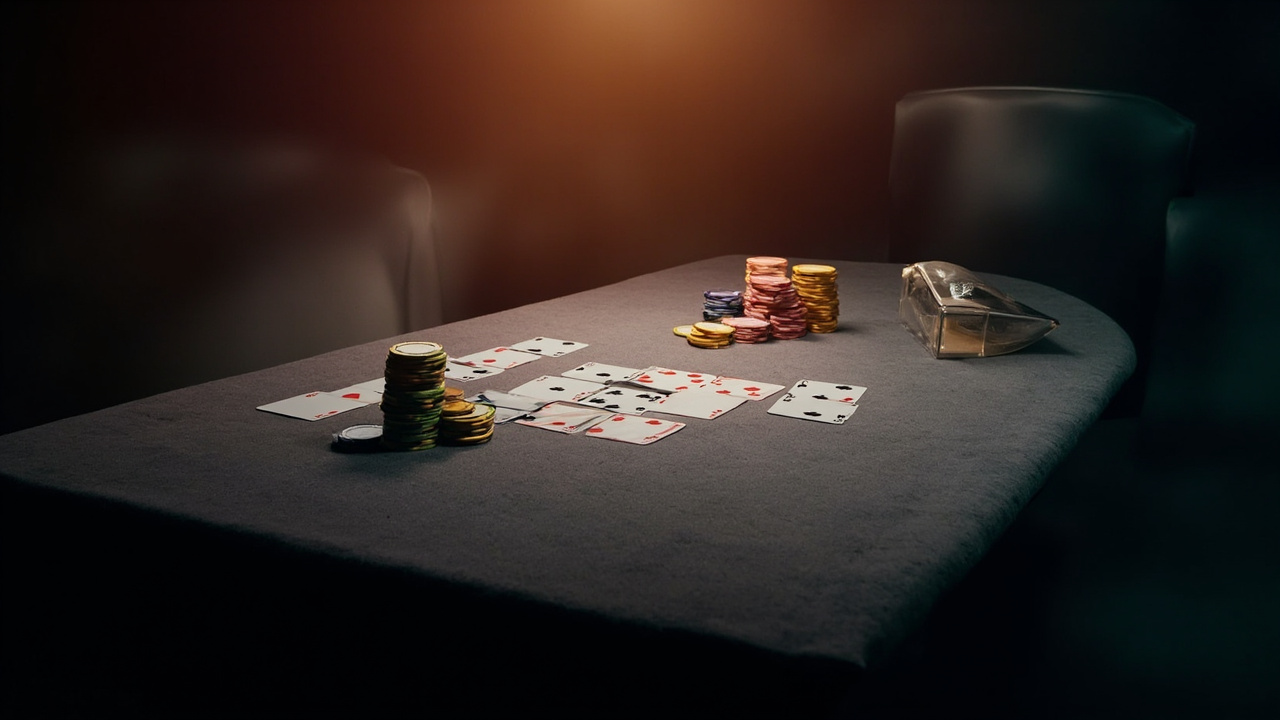
Dominoes in China, cards in the States – pai gow crossed the Pacific in the 1980s when Sam Torosian adapted the tile game for Las Vegas card rooms. The Australian-facing version you’ll find at offshore lounges – streamed by studios like Evolution and Asia Gaming – uses a single 53-card deck: standard 52 plus a joker that acts as a limited wild. Each player, including the banker, gets seven cards and must split them into a five-card “high” hand and a two-card “low” hand.
That split is the whole game, defo. Both hands must beat the dealer’s matching hands to win even money, with a copy/tie on either side pushing. Because the five-card hand ranks by poker rules but the two-card hand only counts pairs and high cards, the strategy tilts toward heavy two-card hands when you can. Nik Robinson, who pioneered mechanics like Megaways, Megaclusters and Megapays at Big Time Gaming, reckons pai gow is the philosophical opposite of a feature slot – a low-volatility game where dozens of small decisions compound rather than a single spin resolving the outcome. Players sampling betting rhythm at home can warm up with a quick round at https://doghousemegawaysdemo.net before stepping into a live table.
The Questions That Shape Every Hand
How should you split your seven cards into two hands?
Every pai gow hand asks: which two cards sit behind, which five lead? The house way at Pai Gow Lounge keeps any pair or trips in the high hand, then builds the strongest two-card low from leftovers. Seasoned players override that one hand in three, especially with face-heavy decks.
The reference standard – used in Atlantic City and European card rooms – is the “optimal” house way: a decision tree prioritising trips, pairs, aces, then kings. Memorise the first six rules and you’ll cover 80 per cent of hands. At any properly licensed overseas lounge, ask for the laminated house way card.
When does the joker earn its keep?
The joker isn’t a true wild card. It can only substitute as an ace or complete a straight, flush, or straight flush. Five-of-a-kind is the holy grail – only possible with the joker, and it beats any other hand including a royal flush. Anywhere else, the joker functions as a fixed ace.
Pai Gow Lounge uses a single 53-card shoe, so the joker appears on average every 53 hands. Some players adjust splits after a 70-hand dry spell, treating a late joker as a small statistical nudge.
| Hand | Beats |
|---|---|
| Five Aces (joker) | Royal flush |
| Royal flush | Straight flush |
| Straight flush | Four of a kind |
| Four of a kind | Full house |
| Full house | Flush |
| Flush | Straight |
| Straight | Three of a kind |
| Three of a kind | Two pair |
| Two pair | One pair |
| One pair | High card |
The joker’s job: upgrade an ace to five-of-a-kind or fill a one-card straight or flush gap. That’s the whole playbook.
How does the banker’s edge actually work?
The banker wins on a copy, loses on a loss, and pushes on a tie. That asymmetry drives the 2.84 per cent house edge – better than European roulette, worse than blackjack basic strategy. In NZ clubs and most UK rooms, the dealer banks every hand; at Pai Gow Lounge, the seat rotates and the banker collects a five per cent commission on wins.
Banking flips the math in your favour when you can sit out losing rounds, since you’re paid on copies rather than losing them. Defo skip the bank seat on a modest bankroll until you can ride 20-hand downswings. Nik Robinson, who built Big Time Gaming around high-variance slot design, argues bank-seat economics are the closest card-game parallel to long-tail feature maths: a small per-hand edge that only matters over volume.
Players used to pokie cadence can scan a pokie spin walkthrough for the Aussie market before committing a bankroll.
Is Pai Gow Right For You? The Player-Fit Checklist
Pai Gow rewards patience. The seven-card grind feels glacial if you usually crank 200 pokie spins a session – tables run 35 to 45 hands per hour, many ending in a push. Baccarat and blackjack players will defo feel at home.
Pai Gow Lounge runs four loyalty tiers – Copper, Silver, Gold, Diamond. The top tiers grant free parking, priority check-in, and lounge access. For Perth players driving in, the parking perk matters. Crown Perth’s main floor is busy as on a Friday; a quieter pai gow room is a no worries alternative. Pai Gow Lounge holds a Curaçao licence – offshore play sits outside ACMA – with AUD deposits after KYC and 24/7 live chat.
“You don’t need to be a poker shark – you need to tolerate the slow pace,” says Eliza Davies, Head of Public Relations at Red Centre Analytics. “Players who treat it as a half-night social session rather than a sprint stay sharper and lose less per hour.”
A quick fit-check before you sit down:
- Comfortable with a two-hour-plus session? Yes/No
- Happy to push rather than push for a win? Yes/No
- Willing to learn six core house-way rules? Yes/No
- Bankroll covers 40 hands at table minimum? Yes/No
Pai Gow isn’t a game for a quick flutter between meetings, but it rewards the same measured thinking that makes a good blackjack or baccarat player. Learn the house way, respect the joker’s limits, and treat the bank seat as a perk rather than a target. Do that, and the slow lane starts making a lot of sense.
